A dead car in the driveway can feel like one more job you do not have time for. If you have accepted an offer and booked a pickup, knowing what happens during vehicle collection makes the day straightforward: the buyer checks the vehicle and ownership details, pays you, and removes it on a tow truck or transport vehicle.
For most unwanted, damaged, scrap, or non-running vehicles, you do not need to arrange transport or spend hours preparing it for sale. You do need to be ready when the collector arrives. A few minutes of preparation can prevent delays and help the pickup go ahead as planned.
Before the vehicle collection is booked
The process starts with a quote. You will normally be asked for the vehicle’s make, model, year, location, condition, and whether it starts or can roll. Be honest about accident damage, missing parts, mechanical faults, flood damage, and whether the vehicle is registered or deregistered. These details affect the offer and determine what type of truck or towing equipment is needed.
A vehicle that cannot start is not a problem, but tell the buyer in advance. The same applies if it is blocked in, has flat tires, is in a tight parking area, or is sitting on grass, gravel, or a steep driveway. The more accurate the information, the easier it is to send the right collection vehicle and keep the collection free of surprises.
Once you agree to the quote, you arrange a collection time. Same-day pickup may be available depending on your location, demand, and access to the vehicle. If you are selling a commercial vehicle, bus, truck, ute, or machinery, collection can take more planning because of size, weight, and site access.
What to do before the driver arrives
You do not need to clean, repair, or prepare an unwanted vehicle for resale. Still, take a few practical steps before handing it over. Remove everything from the cabin, glove box, trunk, door pockets, and under-seat storage. Check for sunglasses, garage remotes, paperwork, work tools, child seats, parking passes, and spare change.
Also remove your plates if required for your situation, and keep any personal registration or insurance paperwork you need. Requirements can differ depending on where you live and whether the vehicle is still registered, so it is sensible to check your local transport authority rules before collection.
Have the keys ready, including spare keys if you have them. A key is useful even when a car will not run because it can unlock the steering, access the cabin, or make loading safer. If keys are missing, tell the buyer before the appointment rather than waiting until the truck arrives.
Make sure the vehicle is accessible. Move other cars if possible, open gates, and let the team know about low power lines, narrow driveways, apartments, security gates, or restricted work sites. The collector needs enough room to safely load the vehicle without damaging nearby property.
When the collection team arrives
The driver or collection representative will first confirm they are at the correct address and inspect the vehicle. This is not a lengthy mechanical inspection. It is a practical check that the make, model, condition, and major damage match the details used for the quote.
They may confirm the vehicle identification number, plate number, and key details. They will also ask for proof that you are the legal owner or are authorized to sell the vehicle. This step protects everyone involved. A legitimate buyer should not remove a vehicle without checking ownership or authority.
If the vehicle matches the description you gave, the agreed offer should stand. If a major issue was not disclosed – for example, a vehicle described as complete is missing an engine, catalytic converter, wheels, or major panels – the collector may need to revise the quote. That does not mean every scratch changes the price. It means the final amount needs to reflect the actual vehicle being collected.
Clear communication avoids awkward conversations at the curb. If you are unsure whether something matters, mention it when requesting the quote.
Paperwork and final handover
The paperwork is usually brief. You may be asked to sign a purchase receipt or transfer document confirming that the vehicle has been sold and collected. Read it before signing, check that the vehicle details are correct, and keep your copy if one is provided.
If the registered owner cannot attend, ask in advance what authorization is needed. Do not assume a family member, tenant, employee, or friend can sell the vehicle without the owner’s approval. For fleet vehicles and business assets, the collector may need confirmation from an authorized company representative.
Before the truck is loaded, do one final walk-around. Open the trunk and check the interior again. Once a vehicle leaves your property and enters dismantling or recycling, recovering forgotten items may not be possible.
When and how you get paid
Payment should be confirmed before the vehicle is taken away. Depending on the service and your arrangement, this may be cash, an instant bank transfer, or another agreed payment method. Ask about the payment method when you book so you know what to expect.
For a straightforward sale, payment is made on the spot after the vehicle and paperwork have been checked. You should not have to pay towing fees for a collection that was quoted as free. If anyone tries to add an unexpected removal charge, stop and ask for a clear explanation before agreeing to proceed.
The final payout depends on the vehicle’s condition, weight, make, model, demand for reusable parts, and scrap-metal value. A late-model vehicle with usable components may be worth more than a stripped shell. On the other hand, some damaged or deregistered vehicles still have real value because their parts and materials can be recovered.
How the vehicle is loaded and removed
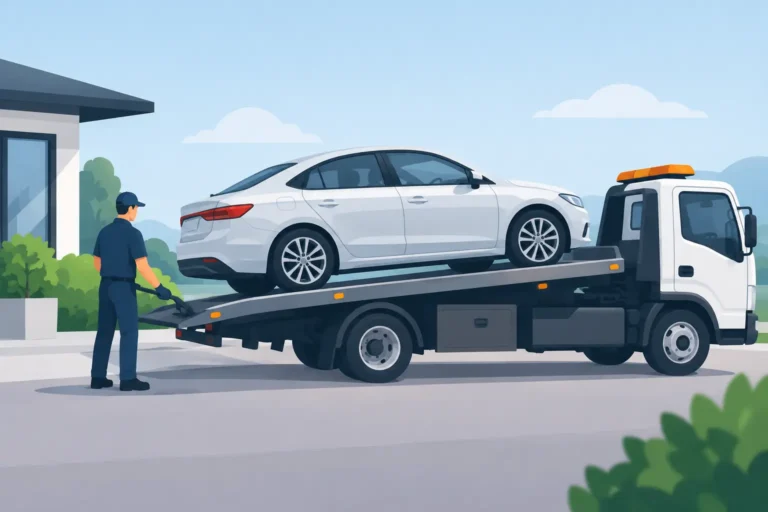
After payment and paperwork are complete, the collection team loads the vehicle. Running vehicles may be driven or winched onto a truck. Non-running cars, accident-damaged vehicles, and vehicles with flat tires are commonly pulled onto a tilt tray or tow truck using a winch.
A professional operator will assess the safest loading method based on the vehicle’s position and condition. If the wheels are locked, the suspension is damaged, or access is difficult, loading may take a little longer. This is normal. Rushing a recovery can damage your driveway, the tow equipment, or the vehicle itself.
You do not need to help push or steer unless the driver specifically asks and it is safe to do so. Keep children, pets, and bystanders away from the loading area. A tow cable under tension and a moving vehicle need space.
Once loaded, the vehicle is secured for transport and taken away. Depending on its age and condition, it may be assessed for resale, dismantled for recycled parts, or processed for scrap recovery. Usable components such as engines, transmissions, panels, lights, wheels, and interior parts can help keep other vehicles on the road at a lower cost.
Common collection problems and how to avoid them
Most pickups are quick, but small details can cause delays. The common issues are an inaccessible vehicle, missing ownership documents, inaccurate condition details, keys that cannot be found, and someone other than the owner trying to complete the sale.
If your vehicle is in a difficult spot, send photos when you request the quote. If it is parked in a shared driveway or apartment lot, arrange access with the property manager first. If the car is partly dismantled, be clear about what is missing. These simple steps give the collector a fair picture of the job and reduce the chance of a changed offer or a rescheduled pickup.
For damaged vehicles, do not try to make them movable at the last minute. A loose bumper, leaking fluid, broken suspension part, or flat tire is better disclosed than improvised around. The right towing setup is safer than taking risks to save a few minutes.
A simple way to get it done
Vehicle collection should not turn into another repair project, private-sale headache, or weekend spent trying to find a tow. With Quick Cash For Cars, the goal is clear: provide accurate vehicle details, confirm the offer, have your ownership information ready, and let the collection team handle the removal.
If your unwanted vehicle is taking up space, gather the keys, clear out your belongings, and be upfront about its condition. That is usually all it takes to turn a parked problem into payment and an empty driveway.