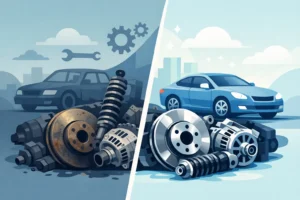

A parked commercial truck can cost you more every week it stays put. It takes up yard space, holds up a replacement purchase, and can become another job on an already full list. Getting cash for old commercial trucks gives owners a practical way to clear unwanted vehicles without spending more money on repairs, advertising, or towing.
Whether you have a dead delivery van, accident-damaged box truck, deregistered work ute, worn-out bus, or a truck that simply no longer fits your operation, selling it for removal can be faster than trying to find a private buyer. The key is knowing what the buyer needs, what affects the offer, and how to avoid surprise costs.
When selling an old commercial truck makes sense
Commercial vehicles are bought to work. Once a truck becomes unreliable, its real cost is not just the next repair bill. It is the missed jobs, delayed deliveries, downtime for staff, replacement rentals, and space it occupies at your workshop or depot.
Selling is often the better call when the engine has failed, the transmission is gone, rust has made repairs uneconomical, or accident damage has put the vehicle off the road. The same applies if your business has upgraded its fleet and an older truck is now sitting unused. Even non-running trucks can still have value in their parts, metal, tires, wheels, drivetrain, and reusable components.
A private sale may be worth considering when the truck is roadworthy, presentable, and in demand. But it can take time. You may need to pay for repairs, inspections, registration, cleaning, advertising, and multiple viewings before a serious buyer appears. For a truck that is damaged, deregistered, or immobile, a vehicle buyer that arranges pickup is usually the more direct option.
What affects cash for old commercial trucks
There is no single fixed price for every old truck. A fair offer depends on the truck itself, its condition, and how easily it can be collected and processed. Giving accurate details upfront helps the buyer quote properly and prevents delays on collection day.
Make, model, and vehicle type
A late-model cargo van, a cab chassis, a tipper, a refrigerated truck, and a heavy-duty truck do not carry the same value. Popular makes and models can be worth more when usable parts are in demand. A truck with a sound engine, gearbox, body panels, wheels, or commercial fittings may have value beyond basic scrap metal.
Tell the buyer what type of vehicle it is and, if known, its year, make, model, and engine size. Mention any special equipment such as a tray, lift gate, toolbox body, refrigeration unit, crane, or tow setup. These details can matter.
Condition and missing parts
Be straightforward about the condition. Does it start and drive? Is it complete? Has it been in an accident? Does it have flood, fire, mechanical, or rust damage? A truck that cannot move is still sellable, but the buyer needs to plan the right recovery equipment.
Missing major parts can lower an offer. For example, an incomplete truck without an engine, transmission, catalytic converter, wheels, or battery may be worth less than a complete vehicle. On the other hand, do not assume an old truck has no value because it has failed mechanically. Many vehicles are purchased specifically for dismantling and recycling.
Location and access
Collection is simple when a tow truck can safely reach the vehicle. Let the buyer know if the truck is behind a locked gate, in a tight backyard, inside a workshop, on soft ground, or blocked by other vehicles. If it is parked on a public road, check whether local rules or permits apply before arranging removal.
Good access can speed up same-day pickup. Difficult access does not always stop a sale, but it may require a different truck or a scheduled collection time. Clear information saves everyone time.
Paperwork and ownership
Have proof that you own the truck or are authorized to sell it. Requirements vary by location, but a vehicle title, registration documents, photo identification, business ownership records, or a signed authorization may be needed. If the truck is financed or has a lien attached, deal with that before selling it.
Do not hand over a commercial vehicle on a verbal agreement alone. Confirm the agreed amount, the collection arrangement, and the payment method before the truck is loaded. A professional buyer should explain what paperwork is required rather than leaving you to guess.
Get a better offer without spending money on repairs
You do not need to restore an end-of-life truck before requesting a quote. In fact, putting money into a vehicle you plan to sell for recycling often does not pay back. What does help is presenting the truck accurately.
Start by gathering the basic details: the make, model, year, mileage if available, condition, location, and whether it runs. Take clear photos from the front, rear, both sides, cab, and any damaged areas. Photograph useful commercial equipment too. This lets the buyer assess the vehicle without pretending it is in better condition than it is.
Remove personal belongings, tools, fuel cards, company documents, GPS units, toll tags, and business signage that you intend to keep. Check storage boxes, under-seat compartments, glove boxes, and the cab carefully. Once a vehicle has been collected for dismantling, retrieving forgotten items may not be possible.
If the truck is part of a fleet, have the person with authority to approve the sale available. A quick decision can make the difference between having the vehicle gone today and having it occupy the yard for another week.
A simple truck removal process
The best vehicle-removal process should not create another logistics problem for your business. You provide the truck details, receive an offer, agree on a pickup time, and get paid when the vehicle is collected.
At Quick Cash For Cars, the goal is to keep that process clear: quote first, arrange collection, then make payment at pickup. Free removal means you do not need to hire a separate towing company just to move a truck that cannot be driven.
Before confirming a collection, ask whether towing is included, whether the quoted amount is the amount you will receive, and what documents must be ready. Ask how payment will be made and whether the buyer can collect a non-running, damaged, deregistered, or incomplete vehicle. Clear answers are a good sign that the service is set up to handle commercial vehicles properly.
Why recycling an old work truck is the practical choice
Old trucks do not need to end up abandoned behind a shed or slowly deteriorating in a commercial yard. Dismantling and recycling can recover usable parts and materials from vehicles that are no longer economical to repair. Engines, transmissions, panels, lights, wheels, seats, electrical parts, and other components may be reused when they are still serviceable. Metals can also be processed for recycling.
That makes selling an unwanted truck more useful than leaving it to rust. It clears valuable space for active vehicles, reduces clutter around the business, and can put money back into your next repair, replacement vehicle, or operating costs.
The right choice still depends on the truck. A well-maintained, running vehicle may earn more through a private or trade sale. But if the truck is dead, damaged, unwanted, or too expensive to fix, waiting for the perfect buyer can cost more than it returns.
If an old commercial truck is blocking access, draining your maintenance budget, or taking up room you need for work, get its details together and request a quote. A clear offer, a planned pickup, and payment at collection can turn an unwanted asset into useful space and money the same day.