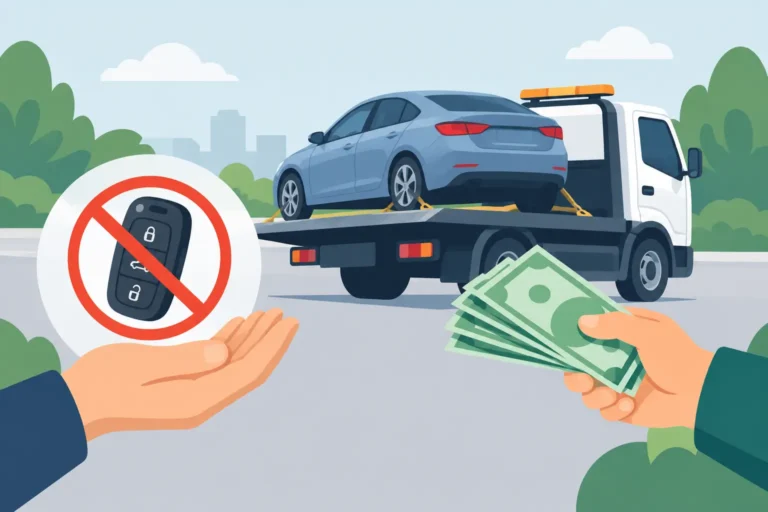
A missing key should not leave a dead, damaged, or unwanted vehicle stuck in your driveway for months. If you need to remove car without keys, you can usually arrange legal collection without replacing the key first. The key is working with a professional vehicle buyer or towing service that can collect non-running vehicles and knows what ownership checks are needed before loading it up.
For many owners, replacing a smart key, rekeying the ignition, or calling a dealer makes little sense. If the vehicle is deregistered, accident-damaged, beyond repair, or simply not worth keeping, that money is better left in your pocket. A proper removal service can assess the vehicle, organize suitable towing equipment, and pay you based on its condition, make, model, parts demand, and scrap value.
Can You Remove a Car Without Keys?
Yes, provided you own the vehicle or are authorized to sell or dispose of it. Professional operators regularly collect vehicles with lost keys, broken keys, flat batteries, locked steering wheels, seized engines, and no registration. They do not need the car to start or be drivable.
What they do need is enough information to confirm the vehicle is yours and plan a safe pickup. Have your photo ID ready, along with any registration papers, purchase receipt, insurance records, or other ownership documents you have. Requirements can vary depending on the vehicle, its status, and your location, so be upfront if paperwork or plates are missing.
Do not try to force entry, bypass the ignition, or move a vehicle that does not belong to you. Aside from possible damage, that can create legal problems. A legitimate removal company will ask sensible questions before collecting a keyless vehicle. That protects you, your property, and everyone involved.
When Replacing the Key Is Not Worth It
A replacement key can be a reasonable choice for a newer car in good condition. But it is often poor value for an end-of-life vehicle. Modern transponder keys and smart fobs may need cutting, programming, and dealership-level coding. Costs can quickly rise when all keys have been lost.
Before paying for a new key, compare that cost with the vehicle’s realistic value. Consider its age, mechanical condition, body damage, expired registration, repair needs, and whether it has been sitting for a long time. A car with a failed transmission, major engine issue, collision damage, or rust may not justify another dollar.
The same applies to commercial vehicles. An old van, ute, truck, bus, or piece of heavy machinery can take up valuable space even when it cannot be started. If the repair bill and key replacement exceed what the vehicle can earn, selling it for cash and arranging removal is usually the cleaner option.
What a Removal Company Needs From You
Giving clear details upfront prevents delays on collection day. Start with the make, model, year, condition, and location of the vehicle. Mention that there are no keys and explain anything that affects access, such as a locked steering wheel, flat tires, missing wheels, a tight driveway, a parking garage, or a vehicle parked on grass.
Photos are helpful when available. They allow the buyer or tow operator to see the vehicle’s overall condition and choose the right equipment. Be honest about accident damage, missing parts, flood damage, or whether the car has been stripped. Accurate information leads to a fairer quote and avoids surprise changes when the truck arrives.
You should also tell the company whether you have the registration paperwork and license plates. In some cases, they may guide you through what to remove or retain before pickup. Keep your personal paperwork, service records, toll tags, garage remotes, and any belongings stored in the glove box, trunk, console, or under the seats.
How to Remove a Car Without Keys: The Simple Process
The process should be straightforward. First, request a quote and give the vehicle details, including the fact that the keys are missing. A reputable buyer will not pretend that every keyless vehicle has the same value. They will consider its condition and the work required to collect it.
Next, agree on a pickup time and make sure the vehicle is accessible. Move other cars out of the driveway if possible, open gates, and let the operator know about low branches, narrow access, or apartment parking rules. You do not need to make the car run, inflate every tire, or find a friend with a trailer.
At collection, show your identification and available proof of ownership. The removal team will confirm the vehicle, complete the required paperwork, and load it using suitable equipment. For a straightforward sale, payment is arranged on the spot before the vehicle is taken away. Quick Cash For Cars can collect unwanted vehicles in all conditions, including those without keys, so owners do not have to organize separate towing.
Getting the Best Offer for a Keyless Vehicle
Missing keys can affect an offer, but they do not automatically make a vehicle worthless. The impact depends on the vehicle. A popular late-model car with desirable reusable parts may still have strong value. A complete 4WD, van, ute, or truck can also be worth more than an owner expects, even if it has not run in years.
To receive an accurate price, share the vehicle identification number if available, the mileage you remember, and details about major components. Let the buyer know whether the engine, transmission, catalytic converter, wheels, panels, interior, and battery are still present. These details matter more than a vague description such as “old car, no keys.”
Avoid accepting a quote that sounds high but includes unclear towing fees or last-minute deductions. Ask whether removal is free, whether the offered amount is the amount you will be paid, and whether the vehicle’s no-key status has already been included in the quote. Clear answers are a good sign that the collection will go smoothly.
Prepare the Vehicle and the Pickup Area
Even when a vehicle has no keys, a few minutes of preparation can make removal safer and faster. Take out all personal items, including documents with your address or financial information. Check the trunk, seat pockets, sun visors, center console, and any aftermarket storage boxes. If you have a spare key, hand it over only after you are comfortable with the sale and paperwork.
Make the pickup area as clear as possible. A tow truck may need room to reverse, position a winch, or use a tilt tray. Tell the driver in advance if the vehicle is blocked in, sitting on a slope, or unable to roll. These situations are manageable, but they may require different equipment and more time.
If the car is parked on a public road, in a managed lot, or at a rental property, check that you have the right permission for collection. Removing a vehicle without the property owner’s approval can create an unnecessary dispute, even if you own the car.
Common Concerns About Keyless Car Removal
Owners often worry that a tow operator will refuse a vehicle without keys. In reality, no-key removals are common. The main issue is not whether the engine starts. It is whether the operator can verify ownership and safely access the vehicle.
Another concern is damage during loading. Professional crews use equipment designed for non-running vehicles, but existing damage, locked wheels, and poor access can affect the loading method. Tell the truth about the vehicle’s condition so the team can arrive prepared.
You may also wonder whether you need to deregister the vehicle first. That depends on local rules and the vehicle’s situation. Ask the buyer what documents they need and what steps remain your responsibility. Keeping records of the sale and removal is always sensible.
A lost key is frustrating, but it does not need to become another costly repair. If the vehicle is no longer worth fixing, arrange a legitimate pickup, have your ownership details ready, and let the right team take the problem off your property.