
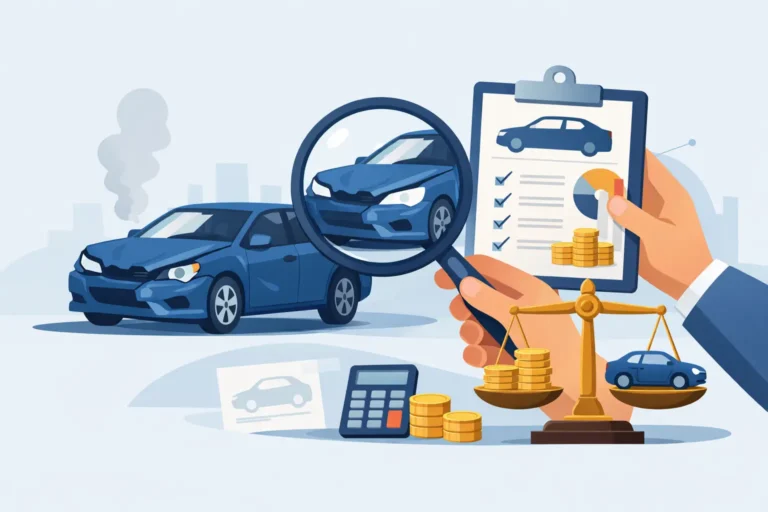
A damaged vehicle can look like a complete loss from the driveway, but that does not mean it has no value. If you are wondering how to value an accident-damaged car, start with what the vehicle was worth before the crash, then look honestly at the damage, repair costs, and the value of its usable parts and scrap metal.
The right price depends on the vehicle and the damage. A late-model pickup with a damaged front end may still be worth strong money. An older sedan with serious structural damage may be worth more as-is than it is after repairs. The goal is not to guess a perfect number. It is to understand which selling option leaves you with the best practical result.
Start With the Car’s Pre-Accident Value
Before you can price an accident-damaged vehicle, find a realistic value for the same vehicle in good working condition. Check the year, make, model, trim, mileage, engine, transmission, and overall condition before the accident. A clean, well-maintained vehicle with lower mileage starts from a higher point than one that already had mechanical issues, rust, warning lights, or worn-out tires.
Use recent local asking prices as a guide, but do not treat them as final sale prices. Sellers often advertise high and accept less. A more useful number is the amount a similar vehicle is likely to sell for in a private sale when it is running properly and has a clear history.
If your vehicle has extras, include them. Four-wheel drive, a reliable diesel engine, a tow package, newer tires, service records, and a desirable trim can all add value. The same is true for commercial vehicles. A van, ute, truck, or bus may have value beyond its age if its engine, transmission, body panels, or equipment can still be used.
How to Value an Accident-Damaged Car by Damage Type
Not all accident damage affects value in the same way. Cosmetic damage such as a cracked bumper, dented door, broken mirror, or scratched paint usually has the smallest impact if the car still drives safely. Buyers can estimate those repairs without worrying that the vehicle is fundamentally unsafe.
Mechanical and structural damage are more serious. A damaged radiator, suspension, axle, steering system, airbag system, or engine can quickly change a repairable car into an as-is sale. Frame damage, flood damage, fire damage, and major electrical issues tend to reduce value sharply because they can be expensive to diagnose and repair correctly.
Airbag deployment matters too. Replacing airbags often involves more than fitting new bags. Sensors, seat belts, control modules, dashboard components, and wiring may also need attention. Even when the exterior damage looks minor, an airbag event can make repairs uneconomical on an older vehicle.
Look for these signs that the vehicle may be worth selling as-is rather than repairing:
- It will not start, move, steer, or brake safely.
- The chassis or frame is bent, cracked, or badly misaligned.
- Multiple airbags have deployed.
- Repair estimates are close to or higher than the car’s pre-accident value.
- The vehicle has major engine, transmission, or electrical damage in addition to collision damage.
A vehicle can still have value in these conditions. Buyers may be interested in the drivetrain, catalytic converter, wheels, battery, panels, interior parts, or recyclable metal. That is why a non-running car should not automatically be treated as worthless.
Compare Repair Cost Against the Likely Return
The biggest mistake owners make is focusing only on what they have already spent. The money paid for the car, previous repairs, registration, and upgrades may matter emotionally, but they do not always change the current market value.
Instead, compare the repair estimate with the vehicle’s likely value after repairs. For example, if a car could sell for $7,000 once repaired but needs $5,500 in bodywork, suspension work, and safety repairs, fixing it may not make financial sense. You would still have the risk of hidden damage, time off the road, and a vehicle with an accident history.
A lower repair bill does not always mean repair is the best choice either. If you need a dependable car immediately, or the damage has already made the vehicle hard to insure or sell privately, an as-is sale can be the simpler route. It depends on your budget, the urgency of the situation, and whether the repaired vehicle will still suit your needs.
Get at least one detailed repair estimate if the car may be repairable. Ask the shop to separate visible damage from possible hidden damage. This gives you a clearer picture and helps prevent a cheap-looking repair from becoming a much larger bill once work begins.
Consider Parts, Scrap, and Demand
When a vehicle is too damaged to repair, its value shifts from resale value to parts and material value. Popular makes and models often bring better offers because there is demand for used engines, transmissions, doors, headlights, wheels, interiors, and other components.
A complete vehicle can be more valuable than one that has been stripped. Even if it does not run, having the keys, major parts, and identifying paperwork available helps a buyer assess it quickly. Vehicles with good catalytic converters, alloy wheels, newer batteries, usable tires, and intact body panels may also be worth more than similar damaged cars.
Weight matters for scrap, especially with older or heavily damaged vehicles, but scrap metal alone is rarely the whole story. A buyer who can dismantle and recycle the vehicle properly may see value in parts that a scrap-only buyer overlooks. This is particularly relevant for vans, 4WDs, trucks, and vehicles from common brands with a strong used-parts market.
Get an As-Is Offer Before Making a Decision
Once you know the condition and likely repair cost, get an offer from a buyer who accepts accident-damaged vehicles. Be straightforward about the damage. Share the year, make, model, mileage, location, whether it starts, the type of accident, and which parts are affected. Clear details lead to a more accurate quote and fewer surprises at pickup.
Photos are useful when available. Take pictures of all sides of the vehicle, the damaged areas, the interior, the odometer, and any warning lights. If you have a repair estimate or insurance assessment, keep that handy as well. It can help explain damage that is not obvious in photos.
A good as-is offer should account for the vehicle’s condition, not promise an unrealistic number and then reduce it when the tow truck arrives. Ask whether towing is included, whether there are any pickup charges, and when payment is made. If the vehicle cannot be driven, free removal can save a meaningful amount on its own.
Quick Cash For Cars buys accident-damaged, non-running, scrap, and unwanted vehicles and can arrange free collection with payment made at pickup. That can be a practical option when you do not want to pay for towing, wait on private buyers, or take on repair risk.
Have the Right Details Ready
Selling a damaged vehicle goes faster when you have the basics ready. Keep your proof of ownership, photo identification, vehicle keys, and any ownership or registration documents together. Remove personal items from the glove box, trunk, console, door pockets, and under the seats before collection.
Do not spend money detailing a heavily damaged car just to sell it as-is. A quick cleanup and accurate photos are enough. What matters most is an honest description of the condition. If the vehicle has a loan, missing paperwork, or an ownership issue, deal with that first. A legitimate buyer needs to know they are purchasing from the authorized owner.
Set a Fair Expectation
Accident damage always reduces a vehicle’s private-sale value, and the reduction can be steep when safety systems, the frame, or the drivetrain are involved. But a damaged car still has a price based on its remaining usefulness. The best offer is not always the highest number written in a message. It is the amount you actually receive after towing, repair uncertainty, delays, and extra fees are considered.
Take clear photos, get the essential facts together, and compare the cost of repairing the car with a straightforward as-is offer. That gives you a realistic answer without letting an unwanted damaged vehicle sit in your driveway for months.