A puddle of brightly colored coolant under the front of your car is not a problem to ignore. Car radiators are a key part of the cooling system, and a small leak can turn into an overheated engine, a roadside breakdown, or expensive engine damage fast. The right move depends on the radiator’s condition, the vehicle’s overall value, and whether the repair bill still makes financial sense.
What Car Radiators Actually Do
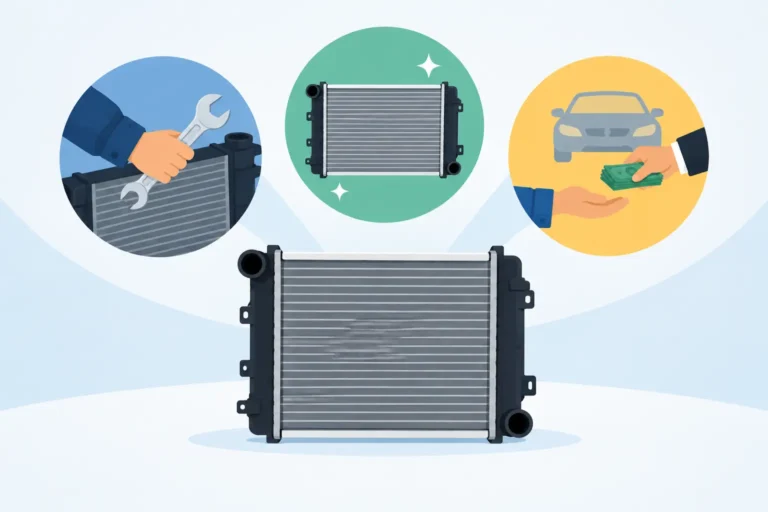
Your engine creates intense heat whenever it runs. The radiator circulates coolant through thin metal tubes and cooling fins, releasing that heat before the coolant travels back through the engine again. A fan pulls air through the radiator when the vehicle is stopped or moving slowly, while airflow does much of the work at highway speeds.
When everything is working properly, the temperature gauge stays in its normal range. When it is not, heat builds quickly. Modern engines can be badly damaged by even one serious overheating event. A warped cylinder head, blown head gasket, or cracked engine block can cost far more than the original radiator problem.
The radiator is not the only possible cause of overheating. A failed thermostat, damaged water pump, split hose, clogged cooling passage, faulty fan, or leaking radiator cap can create similar symptoms. That is why a proper inspection matters before paying for a replacement.
Signs Your Radiator May Be Failing
Some radiator problems announce themselves clearly. Others start slowly, which is why checking your vehicle before a long trip is always a good habit. Watch for coolant loss, a rising temperature gauge, steam from under the hood, a sweet smell after driving, or wet patches around the radiator and hoses.
Coolant may be green, red, orange, blue, or yellow depending on the type used in the vehicle. The color is less important than the fact it is leaking. Do not confuse coolant with clear water dripping from the air-conditioning system. A/C condensation is normal, but coolant usually feels slippery and has a distinct sweet odor.
Other warning signs include visible corrosion on the radiator, bent or damaged cooling fins, and sludge in the coolant reservoir. Brown, rusty coolant may point to internal corrosion or poor cooling-system maintenance. A radiator can also become blocked inside, restricting coolant flow even when there is no visible leak.
If the temperature warning light comes on or the gauge moves into the red, pull over safely as soon as you can. Turn off the engine and let it cool completely. Never remove a hot radiator cap. Pressurized coolant can spray out and cause serious burns.
Why Overheating Gets Expensive Quickly
A radiator replacement is often manageable. Continuing to drive an overheating vehicle is where costs can escalate. Excess heat can damage head gaskets and distort engine components designed to fit together with very tight tolerances.
If the engine stalls, loses power, produces white exhaust smoke, or has milky oil after overheating, the issue may be bigger than the radiator. At that point, spending more money on diagnosis and repairs may not be the best option for an older, damaged, or already unreliable vehicle.
Can a Radiator Be Repaired?
Sometimes, yes. A loose hose clamp, tired radiator cap, worn hose, or small external leak may be relatively straightforward to fix. A professional can pressure-test the cooling system to locate the source of coolant loss instead of guessing.
Small radiator leaks are occasionally repaired, depending on where they are located and what the radiator is made from. However, repair is not always the cheapest long-term choice. Plastic end tanks can crack, aluminum cores can corrode, and old radiators may have several weak points waiting to fail.
Stop-leak products are another short-term option people consider. They can sometimes help in an emergency, but they are not a guaranteed repair. They may clog narrow passages in the radiator, heater core, or engine cooling system. If you need the vehicle to be dependable, treating the actual cause is usually the safer choice.
A replacement radiator makes more sense when the unit is badly corroded, cracked, repeatedly leaking, internally blocked, or damaged in a collision. Replacement is also sensible if labor costs to remove and repair the old radiator are close to the cost of fitting a new or quality used part.
Repair, Replace, or Sell: Make the Practical Call
There is no single answer for every vehicle. If the car is otherwise reliable, has reasonable mileage, and only needs a radiator or hose, repairing it can be worthwhile. This is especially true when the vehicle still meets your daily needs and has a market value well above the repair cost.
The decision changes when the radiator issue comes with other expensive problems. An old vehicle with a failed radiator, transmission trouble, accident damage, rust, worn tires, and an expired registration can become a money pit. Even if the radiator is fixed, another major repair may be waiting around the corner.
Before authorizing work, ask for a clear estimate that separates diagnosis, parts, coolant, and labor. Then compare that total with the vehicle’s real-world value in its current condition. Consider whether it has recently needed repeated repairs and whether you would trust it for commuting, family trips, or work use after the fix.
Selling may be the more practical route if the repair cost is more than you can justify, the engine has already overheated severely, or the car has reached the end of its useful life. Damaged and non-running vehicles can still have value in parts, scrap metal, and reusable components.
How to Protect a Healthy Cooling System
Basic maintenance gives car radiators the best chance of lasting. Check the coolant reservoir level only when the engine is cold, and use the coolant type specified for your vehicle. Mixing incompatible coolants can reduce corrosion protection and create deposits inside the system.
Follow the manufacturer’s service schedule for coolant changes. Old coolant loses its ability to prevent rust, corrosion, and freezing. If your vehicle regularly tows, carries heavy loads, sits in traffic, or operates in very hot conditions, cooling-system maintenance deserves extra attention.
Keep the front of the radiator clear of leaves, dirt, and road debris. Bent external fins reduce airflow, although they should be handled carefully because they damage easily. Also pay attention to the cooling fan. If the fan does not operate when the engine gets hot, the radiator may be fine while the vehicle still overheats at low speeds.
Do not top off coolant with plain water unless it is a genuine emergency and you have no better option. Water does not provide the same freeze protection, boiling protection, or corrosion resistance as the correct coolant mixture. Have the system corrected as soon as possible afterward.
What to Do With a Car That Is Not Worth Repairing
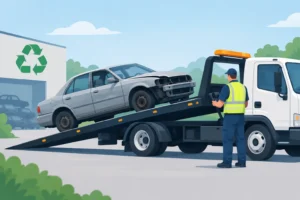
A failed radiator does not mean you need to pay to tow an unwanted car away or leave it taking up space in the driveway. Gather the basic details first: make, model, year, mileage, condition, location, and a clear description of the cooling-system problem. Mention whether it starts, drives, overheats, has collision damage, or is deregistered.
These details help a vehicle buyer give a more accurate quote. Keep your ownership paperwork ready, remove personal belongings, and take out toll tags, parking passes, and garage remotes before collection. Do not try to drive an overheating vehicle to a buyer. Towing is the safer option.
Quick Cash For Cars buys vehicles in all conditions, including damaged, dead, unwanted, and end-of-life vehicles. Free removal and on-the-spot payment can be a practical alternative when a radiator failure is only one part of a much larger repair list.
A radiator problem is easiest to deal with early. If a repair keeps a solid vehicle on the road, get it fixed before overheating causes greater damage. If the numbers no longer work, choose a straightforward sale and clear the vehicle from your property without adding another repair bill.